Your deadline
If you were served with a summons and complaint, you generally have 10 court days to file a written response. Court days do not count Saturdays, Sundays, or court holidays, which works out to about two weeks at most. If you were handed a notice instead, the clock on that notice is already running. Call (951) 702-7771 and read us the first page.
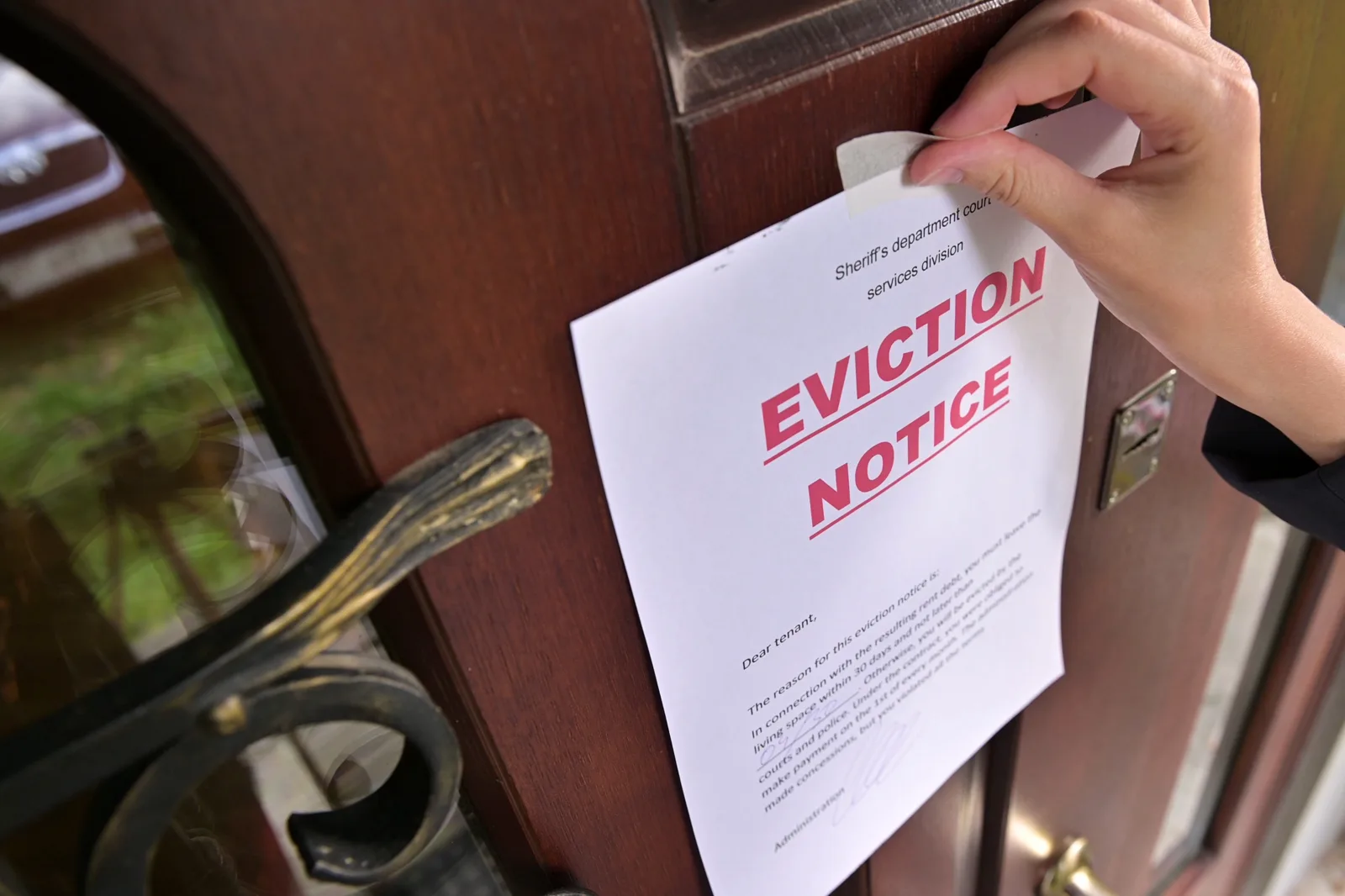
If you are asking what can I do if I’m being evicted, the honest answer is that it depends almost entirely on one thing: which piece of paper you are holding right now. California eviction runs in stages, and each stage has its own clock, its own options, and its own point of no return. People lose homes they could have kept because they guessed at which stage they were in and let a deadline pass while they were waiting to see what would happen next.
So before anything else, work out where you actually are.
Step one: identify what you were handed
There are three documents that matter, and they mean very different things.
A written notice is a demand from your landlord. It might be a 3-day notice to pay rent or quit, a 3-day notice to cure or quit for some other alleged violation, or a 30-day or 60-day notice ending the tenancy. A notice is not a court case and it is not an order. Nobody can lock you out because a notice expired. What it does is start the clock the landlord must run out before filing suit.
A summons and complaint means the lawsuit has been filed. The complaint in an eviction case is a Judicial Council form, and the summons is the document telling you how long you have to respond. This is the stage where a deadline can cost you everything, because if nothing is filed on your behalf in time, the landlord can win by default.
A notice to vacate posted by the sheriff means a judgment has already been entered and a writ of possession has been issued. This is the last stage. There are still emergency options here, but the window is measured in days.
If you are not sure which one you have, look at the top of the first page. Court documents carry a court name and a case number. Notices from a landlord do not.
How to respond to an eviction notice
When the document is a notice, you have more room than you probably think, and the smartest use of that room is to check the notice itself before you react to it.
California notices have to be right. The amount demanded on a pay-or-quit notice has to be rent, and it has to be accurate. Late fees, utilities, and other charges bundled into a rent demand are a recurring source of defective notices. The notice has to name the correct people, state the correct property, tell you where and how to pay, and be delivered in one of the ways the law allows. The time period has to be counted correctly, and for a 3-day notice to pay rent, Saturdays, Sundays, and judicial holidays are not counted.
A notice that gets one of those details wrong does not automatically end the dispute, but it does mean the landlord cannot base a valid case on it. That is worth knowing before you empty your savings or start packing.
If the notice is a 30-day or 60-day notice, the questions are different. Many California rentals now require the landlord to state a reason for ending a tenancy, and some cities have their own local rules that go further. See our guide on 30-day and 60-day notices for what to look for.
How to stop an eviction in California once a case is filed
Once you have been served with a summons and complaint, the entire game becomes about filing something with the court on time. That is the answer to how to stop an eviction in California at this stage, and it is not complicated in concept even though the paperwork is unforgiving.
Your response is normally the Answer, Judicial Council form UD-105. It sets out your defenses: that the notice was defective, that the rent was paid or was not owed, that the landlord refused payment, that the property had conditions the landlord failed to repair, that you were served improperly, that the eviction is retaliatory or discriminatory, or that the landlord did not follow required procedure. In some cases a different first filing makes more sense, such as a motion challenging service or a demurrer attacking the complaint itself.
The moment your response is on file, three things change. The landlord can no longer take a judgment by default. The case has to be set for trial and proved. And you have leverage you did not have the day before, because the landlord now has a contested case to litigate instead of a formality to complete.
If judgment has already been entered
Even here, do not assume it is over. Depending on the circumstances there may be grounds to ask the court to set aside a default, to request a stay that postpones the lockout, or to seek relief that lets a tenancy continue. These are time sensitive requests and the sheriff does not pause while you research them. Our guide on stopping an eviction after judgment explains what is realistically available.
The mistakes that cost people their cases
A short list, from thirty years of watching it happen:
- Waiting to see whether the landlord is serious. By the time it is obvious, the deadline has passed.
- Talking to the landlord instead of filing. Verbal promises do not stop a default judgment. Only a filing does.
- Assuming the deadline is calendar days. It is court days, and counting them wrong is the same as missing them.
- Moving out on the date printed on a notice, then discovering the notice was invalid.
- Filing something incomplete or unsigned, which the court can reject, leaving nothing on file when the clock runs out.
Being evicted and need help? What we do
We have helped California tenants respond on time for thirty years. Tell us what you were served and when you were served with it. We confirm your exact deadline, tell you what has to be filed, prepare it, and file it before the cutoff. From that point we track every date in your case, and you get 24/7 online access to check your file’s progress. If you are in the Los Angeles area, start with our Los Angeles County eviction help page, or call and we will place you with the right court.
The consultation is free and the phones are answered around the clock. Read us the first page of what you were handed and you will know where you stand in a few minutes.
Frequently asked questions
What can I do if I'm being evicted and I cannot pay the rent?
You still have options. Paying is only one way an eviction case ends. Even when the rent is genuinely owed, the landlord has to serve a valid notice, wait the required time, file a lawsuit, serve it correctly, and win. Errors at any of those steps are defenses. Filing a response also creates time to negotiate a move-out date, a payment arrangement, or a dismissal in exchange for keys.
Can I stop an eviction in California once the case is filed?
Filing a lawsuit does not end anything. It starts a court case that the landlord still has to win. The single most important thing you can do is file a written response before your deadline, because a response takes a default judgment off the table and forces the case to be decided on its merits.
What happens if I just ignore the eviction papers?
If nothing is filed by the deadline, the landlord can ask the court to enter your default and issue a judgment without your side ever being heard. From there the landlord can obtain a writ of possession, and the sheriff can post a notice to vacate. Ignoring the papers is the one choice that removes almost every option you have.
Do I have to move out on the date written on the notice?
A notice is a demand from your landlord, not a court order. Only a judge can order you removed, and only the sheriff can carry out a lockout. Many people move out on the notice date believing they have to. Before you do, find out what the notice actually is and whether it was even valid.
How fast do I need to act?
Immediately. Eviction is the fastest civil case in California. The response window is measured in court days, and every stage that follows moves quickly too. The difference between calling on day one and calling on day six is often the difference between several options and one.
Does responding make my landlord angrier or make things worse?
Responding is a normal, expected part of the process and it is your legal right. What it does is stop the case from being decided against you automatically. It also puts you in a position to negotiate, because a landlord who is facing a contested trial has a reason to talk.
This website provides general information about the California eviction process and is not legal advice.